A Roadside Sign and a 1980 Album Cover: Kum & Go and Angel Witch, Two Brands Worth Wearing

Picture a red oval sign glowing over a gas pump somewhere in Iowa. Now picture a burning landscape of fallen angels on the front of a 1980 metal record. They don't sound like they belong in the same wardrobe, but they share something good merch needs: a story people recognise the second they see it.
This piece looks at two brands from very different worlds, Kum & Go and Angel Witch: where each one comes from, what makes its artwork stick, and which pieces are a good place to start if either one speaks to you.
What was Kum & Go, and why does the sign still matter?
Kum & Go began in 1959 in Hampton, Iowa, as the Hampton Oil Company, founded by William A. Krause and Tony S. Gentle. The first convenience stores followed in 1963, and the Kum & Go name arrived in 1975. The Krause family ran the business for decades, moving its headquarters to West Des Moines in 1988 and to the Krause Gateway Center in downtown Des Moines in 2018.
Then the road changed. Maverik announced in April 2023 that it would buy the chain, with around 400 stores across 13 states at the time, and the deal closed that August. Stores began taking the Maverik name in 2024, and the remaining ones now run under that brand.
That is exactly why the old sign has pull. A name that people grew up seeing on every highway exit is now a piece of Midwest memory, and a shirt is one of the few places it still lives. The designs lean into that roadside feel:
- The red oval: the chain's crimson mark with a bold white K&G and a swoosh under the G, the sign most people picture first.
- The arrow sign: a retro Kum & Go arrow in brown and white with a script ampersand, the look of an older storefront.
- If You Build It They Will: the joke line above an outlined retro Kum & Go, for anyone who likes their nostalgia with a grin.
- The Christmas sweater pattern: red KUM AND GO between green tree and zigzag borders, with gift boxes on the back.
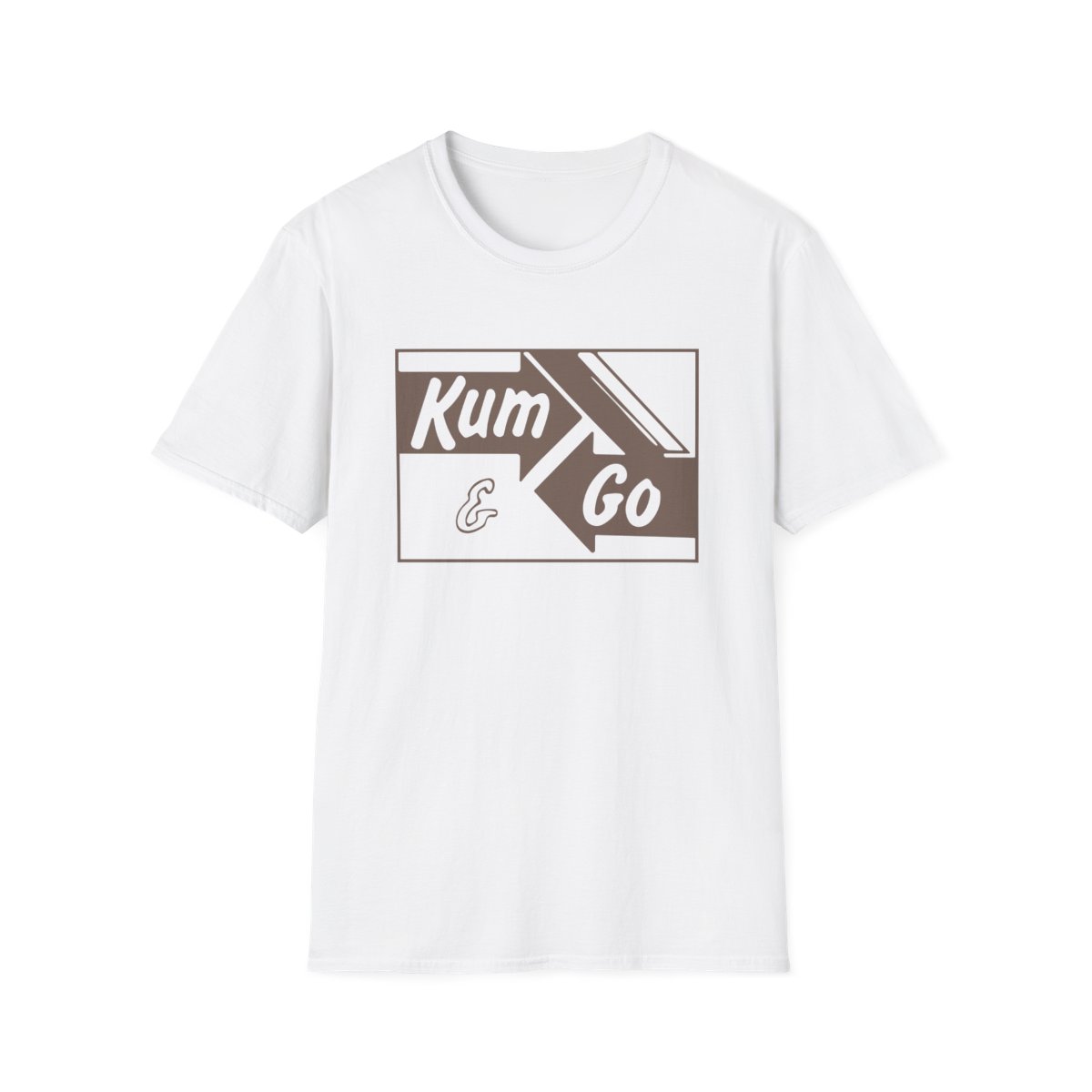
If you only pick one, the brown arrow sign on a softstyle tee is the quietest way in: warm, retro and easy to wear with denim or under an open flannel. The red oval is the louder choice, the one that gets a "wait, I remember that place" from across the room.
Who are Angel Witch?
Angel Witch are a heavy metal band from London, formed in 1976 and counted among the pioneers of the new wave of British heavy metal. Guitarist and vocalist Kevin Heybourne started the band as Lucifer and took the name Angel Witch in 1978; he has been its constant driving force ever since.
The early years moved fast. The single Sweet Danger came out on EMI in May 1980, the song Baphomet appeared on the 1980 compilation Metal for Muthas, and in December 1980 the self-titled debut album arrived on Bronze Records, with every song written by Heybourne. That record is widely seen as a key album of the movement. The Loser EP followed in 1981.
The story kept going: Screamin' 'n' Bleedin' (1985), Frontal Assault (1986), the live album Burn the White Witch: Live in London (2009), As Above, So Below (2012) and Angel of Light (2019, on Metal Blade Records). Today's line-up is Heybourne with Jimmy Martin on rhythm guitar, Will Palmer on bass and Fredrik Jansson on drums. Across all of it, the band is known for a dark, melodic sound and occult-themed lyrics.
Which Angel Witch piece should you start with?
The band's artwork comes straight from its records, which makes choosing easy: pick the era you love.
- The debut: the cover painting, The Fallen Angels Entering Pandemonium, once attributed to John Martin, appears both cropped round inside a tan ring and cut into a yellow-edged triangle. Fiery reds, a whole burning world, instantly recognisable to anyone who owns that 1980 record.
- Loser: a tilted tarot card with a cloaked, scythe-bearing skeleton under a burning sky, for the 1981 EP.
- Angel of Death: a skull-faced figure in a pointed arch with one huge sweeping wing, named for the song on the 1980 debut.
- The newer era: Don't Turn Your Back, the song that opens Angel of Light, shown as staring eyes, a dagger and a chalice inside a purple hexagram.
- The occult pieces: Eliphas Levi's winged Baphomet seated on a globe, a priestess kneeling in gold flames, a fortune teller over a glowing crystal ball.

For colder months, the Don't Turn Your Back three-panel fleece hoodie is a strong pick: the purple hexagram stands out against a dark hoodie, and it nods to the band's most recent studio album rather than only the classic years. Wear it with black jeans and boots to a gig, or over a plain tee on an ordinary Tuesday.
What do a fuel-stop chain and a metal band have in common?
More than you'd think. Both brands carry a strong, single image people remember: a red oval on a highway sign, a burning painting on a record sleeve. Both have a history long enough that the artwork works as a timeline, so you can wear the era that means the most to you. And both reward the person who knows the story, because the best reaction a shirt can get is someone recognising it.
They also mix better than you'd expect. A retro road-sign tee and a dark occult hoodie both sit comfortably in a wardrobe built on black, white and one strong red, which happens to be the same palette a lot of club and festival outfits already run on.
How do you choose between them?
A quick way to decide:
- You love road trips, small towns or Midwest nostalgia: start with Kum & Go's arrow sign or red oval.
- You want something with a laugh in it: If You Build It They Will.
- You grew up on 1980s British metal: the Angel Witch debut cover or the Loser tarot card.
- You like bold, mysterious artwork with a lot to look at: Angel Witch's Baphomet, priestess or crystal ball pieces.
- You need a gift for the holidays: the Kum & Go Christmas sweater pattern brings the season without a single reindeer.
Whichever way you lean, both brands give you a piece of real history to wear. And if your heart is closer to home, the full Fred again.. range is waiting in our shop.